
Gessolini: The Italian Art Tradition Redefining Modern Design and Luxury
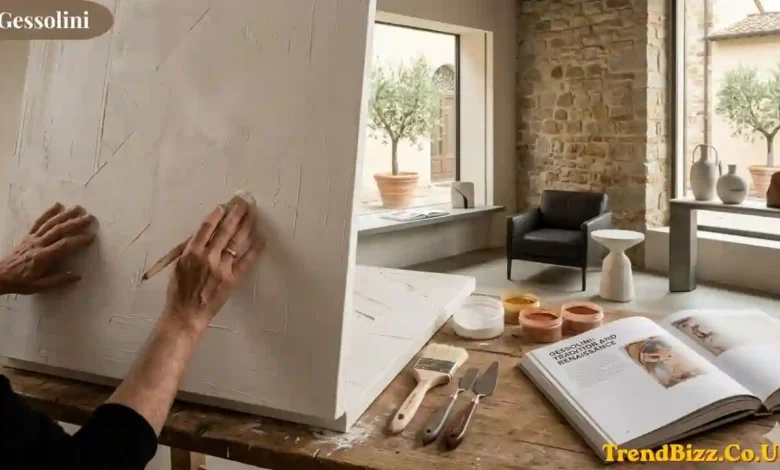
Some words are more than just words. They carry weight, history, and a kind of quiet elegance that makes people stop and pay attention. Gessolini is exactly that kind of word. It sounds refined, almost poetic — and the deeper one looks into it, the more fascinating it becomes. Whether someone stumbles across it in an art history book, a luxury brand description, or a design magazine, gessolini has a way of leaving an impression.
This article takes a close look at what gessolini actually means, where it comes from, how it has shaped art and culture across centuries, and why it continues to matter in today’s world of design, fashion, and sustainability. From Renaissance workshops in Italy to contemporary branding studios, gessolini carries a legacy that is both ancient and remarkably current. Art enthusiasts, designers, fashion lovers, and cultural researchers will all find something worth exploring here.
What Is Gessolini?
The Meaning Behind the Word
To understand gessolini, one must first understand its linguistic parent: gesso. In Italian, gesso simply means chalk or plaster. It is a word with deep roots in both everyday Italian language and the world of fine arts. For centuries, gesso has been used as a preparatory coating — a smooth, carefully applied base placed on canvas, wood, or walls before painting begins.
Gessolini is the diminutive form of gesso. In Italian, adding the suffix “-lini” shrinks and softens a word in a gentle, affectionate way. So where gesso means chalk or plaster, gessolini translates roughly to “little chalks” or “small pieces of plaster.” It is the same idea, made smaller, more delicate, and more refined.
This small linguistic shift actually carries enormous meaning. In Italian, the diminutive form does not just reduce size — it implies care, precision, and a kind of personal attention to detail. Something described with a diminutive suffix feels more crafted, more intentional, more human. That is exactly the spirit gessolini brings to every context it enters, whether as a material, a name, or a design philosophy.
A Word That Belongs to Many Worlds
What makes gessolini genuinely interesting is that it does not belong to just one domain. Traditionally, it referred to small sticks of plaster used by artists and artisans to apply fine textures to surfaces such as canvas or sculptures. But today, the term spans multiple fields — fine art, architecture, luxury fashion, sustainability, and even digital culture. Each of these worlds has adopted gessolini in its own way, drawing on the qualities that the word itself implies: precision, refinement, and a deep respect for craft.
Historical Origins and Italian Roots
Where Gessolini Comes From
The story of gessolini begins in Italy — a country that has long been synonymous with beauty, craftsmanship, and artistic ambition. The term is believed to derive from the Italian word gesso, meaning chalk or plaster, which was historically used by Renaissance artists to prepare surfaces for painting and decorative artwork. This was not a casual material choice. The preparation of a surface was considered sacred by Renaissance masters, a step that could make or break the final work.
Gessolini traces its roots to rural Italian communities, where craftspeople hand-molded natural materials into intricate designs that reflected their surroundings, their beliefs, and the rhythms of daily life. These were not factory workers — they were skilled artisans who understood their materials intimately and worked with their hands in ways that have largely been lost in the modern world.
The Role of Italian Artisanal Culture
Italian artisanal culture has always placed enormous value on the relationship between maker and material. The concept of artigianato — craftsmanship — is not just a profession in Italy; it is a way of life, a source of regional pride, and a form of cultural storytelling. Gessolini grew out of this tradition. It was shaped by communities that believed quality was non-negotiable and that every object made by hand carried the spirit of its maker.
The connection between gessolini and the Italian Renaissance is particularly significant. During that era, artisans used gesso-based materials to restore and preserve artworks that were fading due to time’s wear. The careful application of these materials was considered both a technical skill and an artistic act. Gessolini, in its finer and more delicate form, was a natural extension of this tradition — a tool for those who demanded the highest level of precision from their materials.
Gessolini as a Surname
Interestingly, gessolini also exists as a surname in Italian culture. A family of chalk makers, plaster workers, or surface finishers could have carried the name Gessolini as a way of identifying their craft. This is a common pattern across Italian surnames, where a family’s trade became their name, binding identity to occupation across generations. In this sense, the word gessolini is not just a material or a concept — it is a human legacy, carried forward in family names and in the crafts those families perfected over lifetimes.
Gessolini in Fine Arts and Restoration
A Refined Surface Preparation Medium
In the world of fine arts and historical restoration, gessolini refers to a refined surface preparation medium. It is closely related to traditional gesso but is described as finer in texture, smoother in application, and more precise in finish. This distinction matters enormously in professional art contexts, where the quality of a surface preparation can determine how paint adheres, how colors appear, and how long a work survives.
In fresco painting, the preparation of the wall surface is everything. A poorly prepared surface means cracks, peeling, and decay. A well-prepared surface, treated with care and the right materials, can last for centuries — as the masterworks of the Italian Renaissance continue to prove. Gessolini played a role in achieving that kind of longevity.
Valued for Delicacy and Precision
Gessolini is still highly valued in art circles today due to its fine consistency, which makes it ideal for delicate restoration work. When restorers work on historic frescoes, sculptures, or decorative architectural elements, they need materials that can match the original textures without overwhelming them. Gessolini offers exactly that — a subtle, precise medium that allows skilled hands to work with confidence.
The techniques associated with gessolini have been passed down through generations of artisans. This transmission of knowledge — from master to apprentice, from parent to child, from one generation of craftspeople to the next — is what keeps the tradition alive. It is not knowledge that can be easily learned from a textbook. It requires time, practice, and a deep respect for the materials involved.
In modern restoration contexts, gessolini continues to find applications in the careful repair of historic buildings, museums, and private art collections. It remains a go-to material for professionals who understand that some things simply cannot be replaced with synthetic alternatives.
Gessolini in Design and Architecture
From Material to Philosophy
Over time, gessolini has evolved from being a specific material or technique into something broader — a design philosophy. The concept has grown to influence not just art studios and restoration workshops, but also architecture, interior design, lifestyle products, and even branding strategies. This evolution reflects a growing cultural appetite for things that feel authentic, handcrafted, and thoughtfully made.
In construction and design, gessolini’s smooth, flat texture and excellent porosity make it useful for elaborate modeling, undercoating, and casting decorative objects. It creates surfaces that feel alive — not sterile or mass-produced, but rich with subtle texture and quiet character.
Aesthetic Principles Worth Noting
The aesthetic that gessolini inspires is one of restraint and elegance. It leans toward pale tones, natural materials, and smooth textures. It is an aesthetic that does not shout for attention but rewards those who take the time to notice it. In interior design, this translates to spaces that feel calm, refined, and timeless — rooms that feel comfortable to inhabit rather than simply impressive to photograph.
In architectural ornamentation, gessolini-inspired approaches favor precision over excess. Decorative elements are crafted with care, applied with intention, and designed to complement rather than overwhelm the spaces they inhabit. For contemporary architects and interior designers who are pushing back against the maximalism of recent decades, the gessolini philosophy offers a compelling alternative.
Gessolini in Luxury Fashion and Lifestyle
Italian Craftsmanship Meets Modern Luxury
The world of luxury fashion has long drawn inspiration from Italy’s artistic heritage, and gessolini is no exception. The Gessolini brand draws inspiration from centuries-old Italian traditions where fashion was considered an art form rather than simply clothing. This is a meaningful distinction. When fashion is treated as art, every stitch carries intention, every material is chosen with care, and every design is meant to endure.
Gessolini used in luxury fashion and jewelry represents artisanal value and tradition. Its unique properties — the subtlety of texture, the precision of application, the quiet confidence of natural materials — make it highly desirable among those who understand what they are looking at. Luxury, in the gessolini tradition, is not about logos or price tags. It is about knowing the difference between something made well and something made cheaply.
Slow Fashion vs. Fast Fashion
The philosophy of slow fashion is central to understanding gessolini’s place in the modern fashion world. In a marketplace flooded with disposable clothing designed to be worn a few times and discarded, gessolini stands for something different. It represents garments and objects designed to last for decades — pieces that improve with age and carry the stories of the hands that made them.
This stands in sharp contrast to the fast fashion model, which prioritizes speed and volume over quality and sustainability. For luxury collectors and fashion enthusiasts who have grown disillusioned with trend cycles that move faster than the seasons, gessolini-inspired fashion offers a genuine alternative. The investment is higher, but so is the value — not just in monetary terms, but in the deeper satisfaction of owning something truly well made.
Gessolini and Sustainability
Art as an Environmental Statement
Sustainability and artisanship are natural partners, and gessolini sits comfortably at their intersection. Gessolini’s approach to art encourages dialogue around sustainable practices and inspires others to think creatively about their own contributions to environmental preservation. This is not sustainability as a marketing strategy — it is sustainability as a deeply held value, expressed through the materials chosen and the processes followed.
One of the most striking aspects of the gessolini approach to sustainability is the innovative use of recycled materials. Items that might otherwise end up in landfills — discarded plastic bottles, old newspapers, materials that modern consumer culture treats as trash — are repurposed and transformed into works of art. The mundane becomes extraordinary. The disposable becomes permanent. This is a powerful statement, both aesthetically and environmentally.
Slow Design and Collective Responsibility
The slow design movement — a counterpart to slow fashion and slow food — aligns closely with the gessolini philosophy. Slow design prioritizes thoughtfulness over speed, sustainability over novelty, and community over mass production. Gessolini fits naturally into this movement because it has always been about taking the time to do things properly, using materials that respect both the maker and the environment.
Community collaborations play an important role in gessolini’s sustainability story. By working with local organizations, gessolini-inspired initiatives foster a sense of collective responsibility — the understanding that caring for the planet is not an individual act but a shared commitment. This sense of community is itself part of the Italian artisanal tradition, where local guilds and workshops sustained not just individual craftspeople but entire villages and towns.
The Cultural Significance of Gessolini
More Than an Object
In many regions, gessolini is more than just an object or a material — it is a symbol of familial ties, shared history, and cultural continuity. The techniques associated with gessolini have been passed down through generations, binding communities together through the shared practice of making things by hand. This kind of knowledge transfer is increasingly rare in the modern world, which makes it all the more precious.
Cultural festivals in various regions frequently showcase gessolini works, celebrating not only the artistry but also the stories behind each piece. These events serve as gathering points for communities to reconnect with their past — to remember who they are and where they come from. In a world that often prizes the new over the old, these festivals are acts of cultural preservation as much as celebration.
A Bridge Between Tradition and Modernity
Perhaps the most compelling aspect of gessolini’s cultural significance is its ability to function as a bridge. It connects the past to the present, the traditional to the contemporary, the local to the global. It preserves local and regional identity while remaining open to new interpretations and applications. Communities that practice gessolini-inspired crafts are not living in the past — they are finding ways to bring the best of the past into the present.
This bridging quality is what makes gessolini relevant not just to historians and art restorers, but to designers, entrepreneurs, and cultural innovators who are looking for ways to create things that feel genuinely meaningful in an increasingly homogenized world.
Gessolini in the Digital Age
Ancient Craft Meets Digital Culture
It might seem surprising that a concept rooted in Renaissance Italy would find a place in the digital world, but gessolini has managed exactly that. From its roots in Italy’s artisan craftsmanship to its place in contemporary design and digital culture, gessolini represents a bridge between tradition and innovation. This is not a contradiction — it is an evolution, driven by the recognition that the values gessolini embodies are as relevant online as they are in a physical workshop.
Online interest in gessolini has grown steadily in recent years, with designers, content creators, and cultural commentators discovering the concept and exploring its implications for their own work. Search trends around the term reflect a broader cultural appetite for authenticity and craft — a pushback against the disposability and superficiality that characterize much of modern consumer culture.
Gessolini Aesthetics in Digital Branding
In digital branding and design, gessolini-inspired aesthetics are increasingly visible. Brands that want to communicate quality, heritage, and intentionality are drawing on the visual language of gessolini — pale tones, natural textures, restrained elegance, and a sense of quiet confidence. These aesthetics translate well to digital platforms, where the noise of competing content makes understated sophistication stand out rather than disappear.
For graphic designers, brand consultants, and digital artists, the gessolini philosophy offers a valuable framework: prioritize craft over speed, depth over surface, and longevity over trend.
Why Gessolini Is Gaining Attention Today
A Word That Invites Exploration
Words like gessolini thrive because they leave room for interpretation. They invite exploration, creativity, and innovation. Unlike terms that are rigidly defined and narrowly applied, gessolini carries a richness that allows different people in different fields to find their own connection to it. An artist sees a material. A designer sees a philosophy. A fashion enthusiast sees a tradition. A sustainability advocate sees a model.
This openness is not a weakness — it is the source of gessolini’s enduring appeal. It is a concept spacious enough to contain multitudes, precise enough to maintain integrity, and beautiful enough to inspire genuine admiration.
The Cultural Shift Driving Interest
There is a broader cultural shift at work here. Across industries and communities, people are increasingly drawn to things that are crafted with care, made from honest materials, and built to last. They are pushing back against the disposability of modern consumer culture and seeking out alternatives that offer genuine value — not just in function, but in meaning.
Gessolini speaks directly to this shift. It represents exactly the qualities that modern consumers are searching for: authenticity, craftsmanship, sustainability, and a connection to something larger than the individual purchase or trend. Artists, designers, collectors, and sustainability advocates are all finding in gessolini a concept worth caring about.
Conclusion
Gessolini is, at its heart, a word about refinement. It speaks of small things made with great care — of chalk and plaster transformed by skilled hands into surfaces that carry beauty and meaning across centuries. It is a material, a philosophy, an aesthetic, and a cultural symbol, all rolled into one elegantly diminutive Italian word.
The enduring appeal of gessolini lies in what it represents: the belief that things worth making are worth making well, that traditions worth preserving are worth the effort, and that beauty does not have to shout to be heard. In a world that often rewards the loudest and the fastest, gessolini is a quiet but powerful reminder that the most meaningful things are usually the most carefully made.
For anyone curious about Italian design heritage, anyone drawn to the principles of slow fashion and sustainable craft, or anyone simply looking for a concept that connects artistry to purpose — gessolini is well worth exploring. The conversation around it is growing, and there has never been a better time to join it.
Also Read: