
Tightrope Game, A Complete Guide to the Thrilling Balance Challenge (tightrope game)

The tightrope game, ?? is a concept inspired by real-life balance performance and digital gameplay challenges where precision, patience, and timing matter the most. Whether it appears in arcade-style games, mobile challenges, or simulation-based experiences, the idea behind the tightrope game is simple yet deeply engaging: stay balanced while crossing a narrow path without falling.
This game style has become popular because it combines reflex control with mental focus. It may look easy at first, but as the rope gets thinner or the speed increases, even a small mistake can cause failure. That tension is what makes the tightrope game exciting for players of all ages.
In this article, we will explore everything about the tightrope game, ??, including how it works, its gameplay mechanics, strategies, psychological effects, and why it continues to attract players worldwide.
What is the Tightrope Game, ???
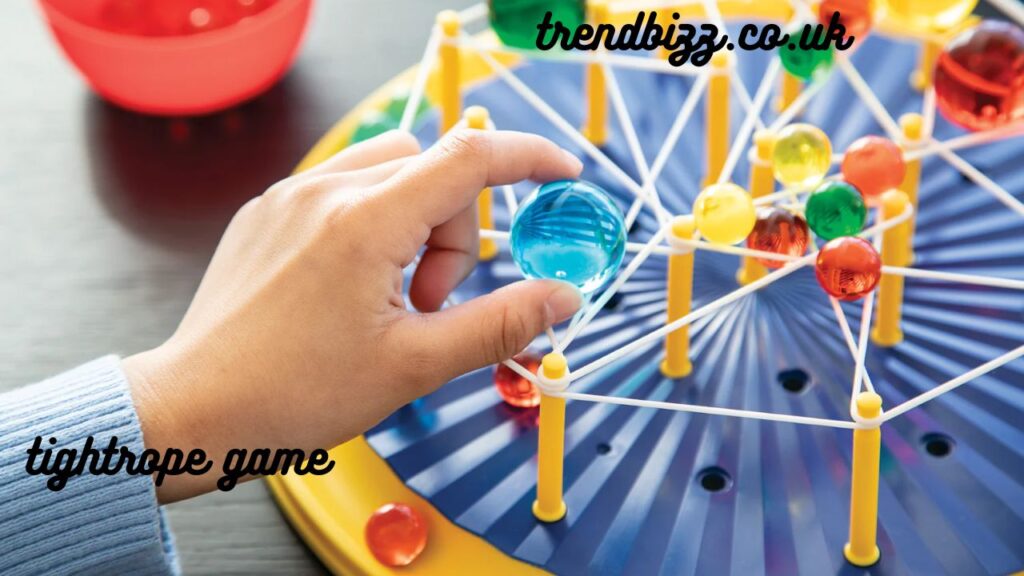
The tightrope game, ?? is based on the idea of walking or controlling a character on a narrow rope or line while maintaining balance. The goal is usually to reach the end without falling. In some versions, players control a circus performer, a cartoon character, or even abstract shapes that must move carefully across unstable surfaces.
In digital versions, the rope may sway, move, or become thinner as the game progresses. This creates increasing difficulty and forces the player to improve coordination. The challenge is not only physical (in real-life inspiration) but also mental, as players must stay calm under pressure.
What makes the tightrope game unique is its simplicity combined with rising difficulty. It does not require complex controls, but mastering it is extremely challenging.
Gameplay Mechanics of Tightrope Game, ??

The gameplay of the tightrope game, ?? usually revolves around balance control. Players may use arrow keys, tilt controls, or touch gestures depending on the platform. The objective remains the same: keep the character steady on the rope.
In many versions, the rope reacts to movement. If the player leans too far in one direction, the character begins to lose balance. Some advanced versions even introduce wind effects, moving ropes, or obstacles that make progression harder.
Timing is also important. Players must decide when to move forward and when to stabilize. Rushing often leads to falling, while being too slow may introduce new challenges. This balance between speed and control is what defines the tightrope game experience.
The game often increases in difficulty level by level, testing how well a player can adapt under pressure.
Key Features of Tightrope Game, ??
One of the main reasons the tightrope game, ?? is so popular is because of its simple but engaging features. The first key feature is realistic balance physics. Many modern versions simulate real-world motion, making the rope feel unstable and dynamic.
Another feature is progressive difficulty. As players move forward, the rope becomes narrower or starts moving unpredictably. This keeps the gameplay fresh and challenging.
Visual simplicity is also a major feature. Most tightrope games do not rely on heavy graphics but instead focus on smooth motion and clean design. This allows players to focus entirely on balance and control.
Finally, scoring systems or distance tracking add competitive elements. Players often try to beat their previous best score or compete with others, making the game more addictive and replayable.
Strategies to Master the Tightrope Game, ??
To succeed in the tightrope game, ??, players need more than just quick reactions. One important strategy is maintaining steady control instead of making sudden movements. Small and controlled adjustments help keep balance stable.
Another strategy is rhythm-based movement. Instead of rushing forward, players often perform better when they move in a steady rhythm. This reduces mistakes and improves consistency.
Focus is also essential. Since the game requires continuous attention, even a brief distraction can lead to failure. Many experienced players recommend staying calm and avoiding panic when balance starts to shift.
Lastly, practice plays a major role. The more time you spend playing the tightrope game, the better your muscle memory and reaction timing become. Over time, difficult levels start to feel easier.
Psychological Effects of Tightrope Game, ??
The tightrope game, ?? is not just about entertainment—it also has interesting psychological effects. One of the main effects is improved concentration. Since the game demands full attention, players naturally develop better focus over time.
It also teaches patience. Players quickly realize that rushing leads to failure, so they learn to slow down and think before acting. This mindset can be useful in real-life decision-making situations.
Another psychological aspect is stress management. The tension of balancing on a narrow rope creates pressure, and learning to stay calm in the game can help players manage stress better in other areas.
However, the game can also create frustration if players repeatedly fail. This is why balancing playtime is important to keep the experience enjoyable.
Variations of Tightrope Game, ??
There are many variations of the tightrope game, ?? across different platforms. Some versions are simple 2D mobile games where players tap to maintain balance. Others are more advanced 3D simulations with realistic physics and environments.
In some arcade-style versions, the rope may move through different landscapes such as mountains, cities, or circus arenas. Each environment adds new challenges and visual appeal.
Multiplayer versions also exist, where players compete to see who can stay on the rope the longest. This competitive element increases excitement and replay value.
There are even puzzle-based adaptations where players must plan movements carefully rather than relying on reflexes alone. This shows how flexible the tightrope game concept can be.
Why the Tightrope Game, ?? is So Popular
The popularity of the tightrope game, ?? comes from its perfect mix of simplicity and challenge. Anyone can understand the basic concept within seconds, but mastering it takes time and effort.
It also provides instant feedback. Every mistake is clearly visible, which helps players learn quickly and improve. This makes the learning curve satisfying rather than frustrating.
Another reason for its popularity is accessibility. Many tightrope games can be played on mobile devices, making them easy to enjoy anywhere. They do not require high-end hardware or complicated setups.
Finally, the thrill of balance and near-failure moments keeps players engaged. The feeling of almost falling but recovering successfully is what makes the game exciting.
Conclusion
The tightrope game, ?? is a fascinating blend of skill, focus, and timing. Its simple concept hides a deep level of challenge that keeps players engaged for long periods. Whether played casually or competitively, the tightrope game tests patience, reflexes, and mental control.
ALSO READ : download granny on laptop usitility ahzvyb2x96e, installation guide, PC setup and safe download method