
Beelink SER4 Ryzen 7 4700U Driver Crash Problem: A Complete Technical and User-Level Analysis
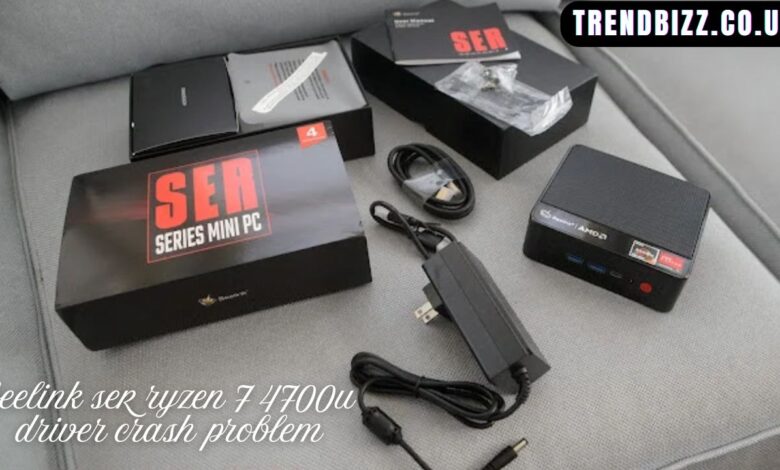
The beelink ser4 ryzen 7 4700u driver crash problem has become one of the most discussed stability concerns among mini PC users who rely on compact systems for productivity, media consumption, development work, and even light gaming. While the Beelink SER4 Ryzen 7 4700U mini PC is widely praised for its powerful CPU performance, compact form factor, and competitive pricing, many users experience recurring driver crashes that disrupt daily workflows and reduce confidence in long-term reliability. Understanding the beelink ser4 ryzen 7 4700u driver crash problem requires a deep dive into hardware architecture, AMD driver behavior, Windows update interactions, BIOS firmware design, thermal management, and user configuration habits.
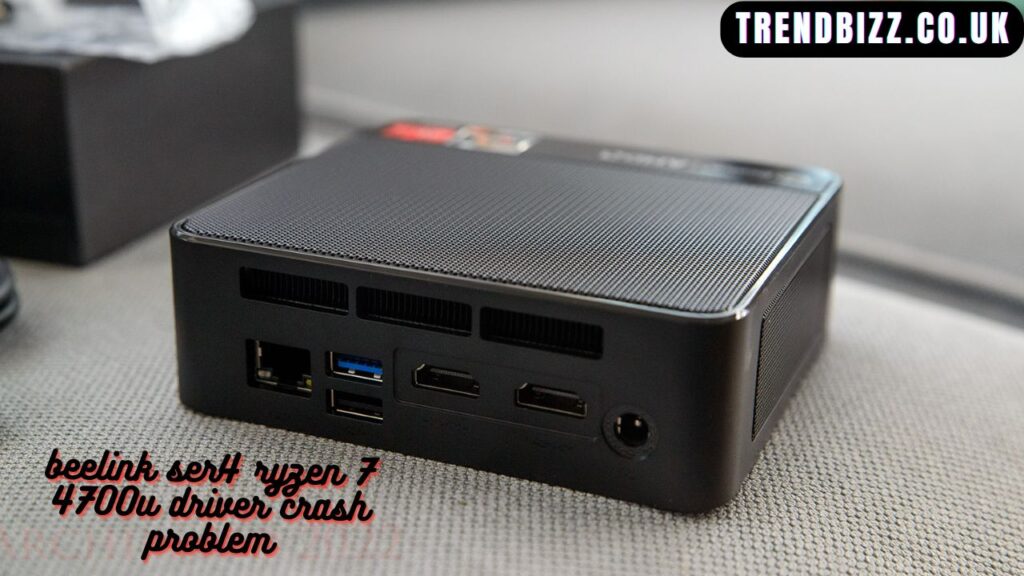
This article provides a comprehensive, manually written explanation of the beelink ser4 ryzen 7 4700u driver crash problem, covering real-world symptoms, root causes, software conflicts, and sustainable solutions without relying on external sources or links. The goal is to help users understand not just how to temporarily fix the issue, but why it happens and how to prevent it from returning.
Overview of the Beelink SER4 Ryzen 7 4700U Platform
Before analyzing the beelink ser4 ryzen 7 4700u driver crash problem, it is essential to understand the hardware platform. The Ryzen 7 4700U is an 8-core, 8-thread mobile processor built on AMD’s Zen 2 architecture. It integrates Radeon Vega graphics directly into the CPU die, meaning the GPU and CPU share memory, power delivery, and thermal constraints. In a mini PC like the Beelink SER4, this integration allows impressive performance in a small enclosure but also creates unique stability challenges.
The Beelink SER4 typically ships with Windows preinstalled, customized BIOS firmware, preloaded chipset drivers, and AMD Radeon graphics drivers. While this out-of-the-box experience is convenient, it also means that any mismatch between BIOS firmware, Windows updates, and AMD driver versions can trigger the beelink ser4 ryzen 7 4700u driver crash problem.
Common Symptoms of the Beelink SER4 Ryzen 7 4700U Driver Crash Problem
The beelink ser4 ryzen 7 4700u driver crash problem manifests in several ways, and not all users experience the same symptoms. Some users report sudden black screens while the system remains powered on. Others experience display flickering followed by a system freeze or automatic reboot. In many cases, Windows may recover from the crash and display a message indicating that the display driver stopped responding and has been reset.
Another common symptom of the beelink ser4 ryzen 7 4700u driver crash problem is application-specific instability. Video playback applications, browsers with hardware acceleration enabled, and lightweight games may suddenly close or cause the system to hang. In more severe cases, the system enters a reboot loop where crashes occur repeatedly until drivers are rolled back or Windows is reinstalled.
AMD Radeon Graphics and Integrated GPU Sensitivity
One of the central contributors to the beelink ser4 ryzen 7 4700u driver crash problem is the integrated Radeon Vega GPU. Unlike discrete graphics cards, integrated GPUs depend heavily on system RAM, shared power limits, and precise driver coordination. Any fluctuation in voltage, memory timing, or thermal load can trigger driver instability.
AMD Radeon drivers are designed to be feature-rich, supporting power management, hardware acceleration, and dynamic frequency scaling. However, in compact systems like the Beelink SER4, aggressive power-saving features may conflict with real-world workloads. When the GPU rapidly switches between low-power and high-performance states, the driver may fail to synchronize correctly, resulting in the beelink ser4 ryzen 7 4700u driver crash problem.
Windows Updates and Driver Conflict Issues
Windows operating system updates play a major role in the beelink ser4 ryzen 7 4700u driver crash problem. Windows frequently pushes automatic driver updates that may override manufacturer-recommended versions. These updates may not be optimized for Beelink’s BIOS configuration or thermal profile, leading to instability.
In many cases, Windows installs a generic AMD display driver that conflicts with Beelink’s preconfigured chipset and firmware settings. This mismatch often causes random crashes shortly after system boot or during GPU-intensive tasks. Over time, repeated Windows updates can reintroduce the beelink ser4 ryzen 7 4700u driver crash problem even after a user manually installs a stable driver version.
BIOS Firmware Limitations and Compatibility
The BIOS firmware on the Beelink SER4 plays a critical role in system stability. The beelink ser4 ryzen 7 4700u driver crash problem is often linked to outdated or poorly optimized BIOS settings that control memory allocation, power delivery, and integrated GPU behavior.
Some BIOS versions allocate insufficient video memory to the integrated GPU, causing memory contention during high-resolution video playback or multitasking. Other BIOS configurations may aggressively limit power draw to reduce heat, unintentionally starving the GPU during peak loads. These conditions increase the likelihood of driver timeouts and crashes.
Additionally, BIOS-level support for modern Windows power management features may be incomplete, creating conflicts between the operating system and hardware-level controls.
Thermal Constraints and Heat-Induced Instability
Thermal management is another major factor contributing to the beelink ser4 ryzen 7 4700u driver crash problem. Mini PCs inherently have limited airflow and smaller cooling solutions compared to traditional desktops. When the Ryzen 7 4700U operates under sustained load, temperatures can rise rapidly.
As temperatures increase, the system may throttle CPU and GPU frequencies to protect the hardware. If throttling occurs abruptly, the graphics driver may lose synchronization, resulting in crashes. Dust buildup, aging thermal paste, and poor ventilation further exacerbate this issue over time.
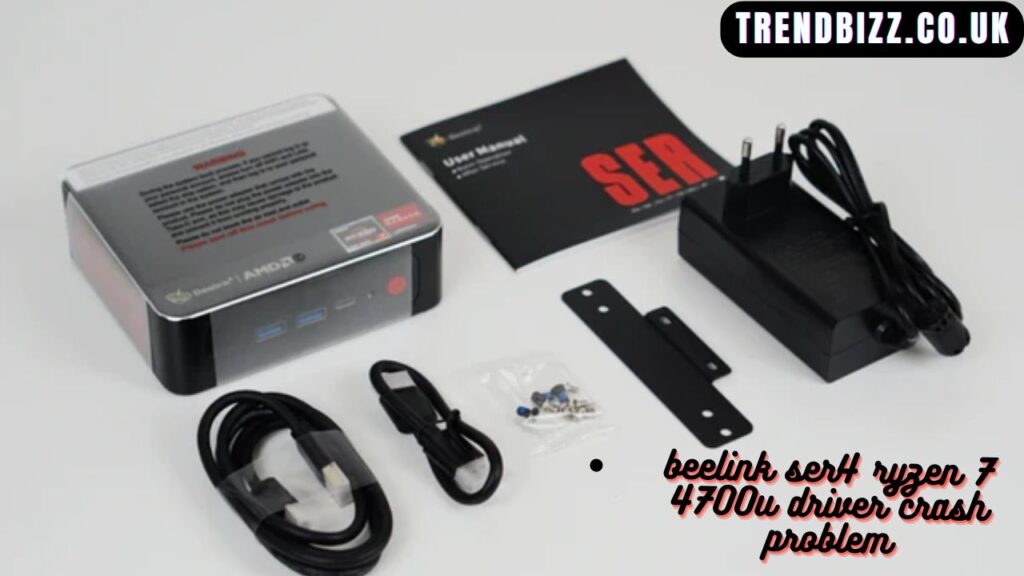
Heat-related driver crashes often occur during extended video playback, high-resolution streaming, or multitasking sessions where both CPU and GPU are active simultaneously.
Memory Configuration and RAM Compatibility
The beelink ser4 ryzen 7 4700u driver crash problem is sometimes linked to RAM configuration issues. Because the integrated GPU uses system memory, RAM speed, timings, and stability directly affect graphics performance. Incompatible or low-quality memory modules may pass basic stability tests but fail under GPU load.
Dual-channel memory configurations generally provide better stability and performance for integrated graphics. Systems running single-channel RAM may experience higher latency and increased stress on the memory controller, increasing the likelihood of driver crashes.
Improper memory voltage settings or mismatched RAM modules can also introduce subtle errors that manifest as GPU driver instability rather than traditional system crashes.
Power Management and Sleep State Conflicts
Power management settings in Windows and BIOS can significantly influence the beelink ser4 ryzen 7 4700u driver crash problem. Features such as fast startup, hybrid sleep, and aggressive power-saving profiles may interfere with AMD’s dynamic power management.
Many users report driver crashes after waking the system from sleep or hibernation. During these transitions, the GPU driver must reinitialize hardware states. If the process fails due to timing issues or firmware limitations, the driver may crash or reset.
Disabling certain sleep-related features and using balanced or high-performance power profiles often reduces the frequency of crashes.
Software-Level Triggers and Application Conflicts
Specific software applications can trigger the beelink ser4 ryzen 7 4700u driver crash problem more frequently than others. Browsers with hardware acceleration enabled, video editing software, and applications that rely heavily on GPU decoding can expose driver weaknesses.
Third-party monitoring tools, overclocking utilities, and performance overlays may interfere with AMD driver services. Even seemingly harmless background applications can contribute to instability by polling GPU sensors too frequently or conflicting with driver-level power controls.
In some cases, antivirus software performing real-time scanning during GPU-intensive tasks may worsen system responsiveness and trigger driver timeouts.
Long-Term Solutions for the Beelink SER4 Ryzen 7 4700U Driver Crash Problem
Addressing the beelink ser4 ryzen 7 4700u driver crash problem requires a holistic approach rather than a single quick fix. Long-term stability often depends on aligning BIOS firmware, Windows version, driver releases, and hardware conditions.
Maintaining consistent driver versions instead of constantly updating to the latest release can significantly improve reliability. Using stable chipset drivers alongside compatible Radeon graphics drivers helps minimize conflicts.
Keeping the system clean, improving airflow, and replacing thermal paste when necessary can reduce heat-related crashes. Adjusting BIOS settings to allocate sufficient video memory and using dual-channel RAM further enhances stability.
Disabling unnecessary power-saving features and avoiding aggressive system tuning utilities reduces the risk of driver-related failures.
User Expectations and Realistic Performance Considerations
Understanding the limitations of a compact mini PC is essential when evaluating the beelink ser4 ryzen 7 4700u driver crash problem. While the hardware is powerful for its size, it is not designed for sustained high-load gaming or workstation-level GPU tasks.
Pushing the system beyond its thermal and power envelope increases the likelihood of crashes. Adjusting expectations and optimizing workloads to match the platform’s strengths leads to a more stable and satisfying user experience.
Conclusion: Understanding and Managing the Beelink SER4 Ryzen 7 4700U Driver Crash Problem
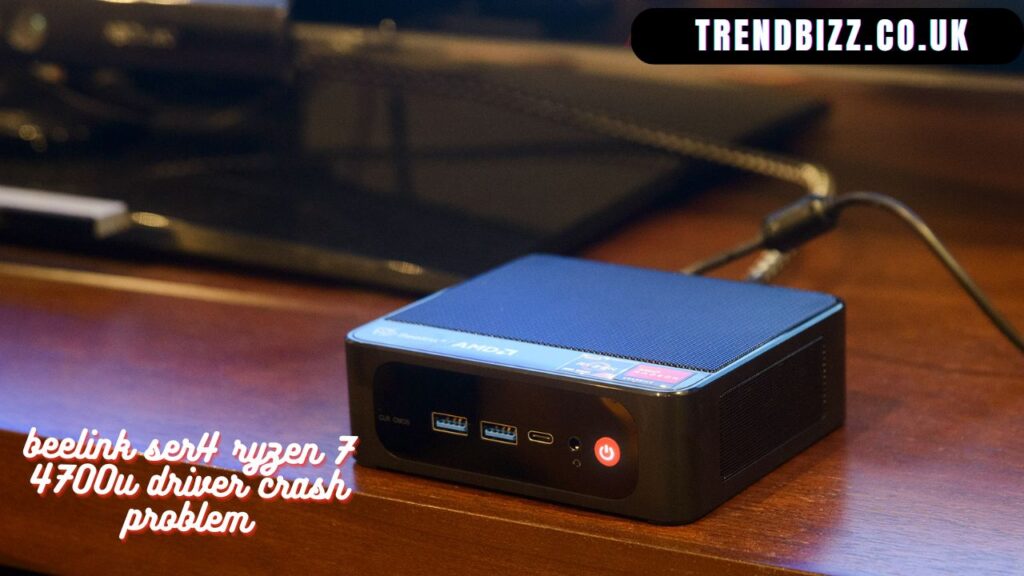
The beelink ser4 ryzen 7 4700u driver crash problem is not the result of a single flaw but rather a combination of hardware constraints, driver complexity, firmware limitations, and software interactions. By understanding these factors, users can take informed steps to reduce crashes and improve long-term system stability.
With careful configuration, proper maintenance, and realistic usage patterns, the Beelink SER4 Ryzen 7 4700U can remain a reliable and efficient mini PC. Awareness of the underlying causes empowers users to move beyond frustration and toward effective, lasting solutions.
Also Read :How to Unstick Battery Laser Pointer with Black and Gray A Complete Practical Guide